PAST SIMPLE VS. PAST PROGRESIVE
PAST SIMPLE VS. PAST PROGRESIVE
PAST SIMPLE
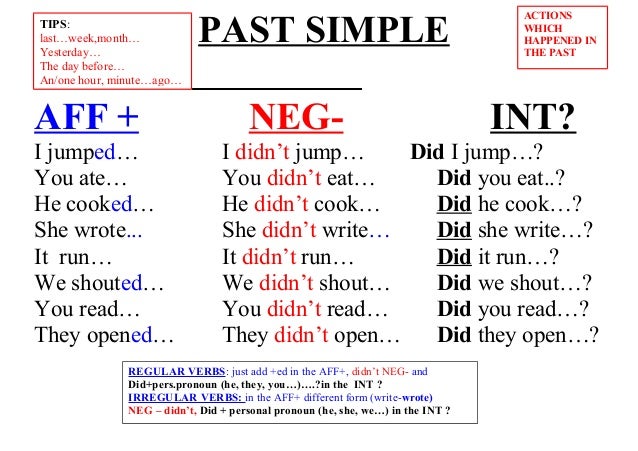
It is used to talk about an action that ended in a time before the current one. The duration is not relevant. The time in which the action is located may be the recent past or a distant past.
It is used to talk about an action that ended in a time before the current one. The duration is not relevant. The time in which the action is located may be the recent past or a distant past.

 Use
Use
We use the past tense to talk about:
- something that happened once in the past:
I met my wife in 1983.
We went to Spain for our holidays.
They got home very late last night.
We went to Spain for our holidays.
They got home very late last night.
- something that happened again and again in the past:
When I was a boy I walked a mile to school every day.
We swam a lot while we were on holiday.
They always enjoyed visiting their friends.
We swam a lot while we were on holiday.
They always enjoyed visiting their friends.
- something that was true for some time in the past:
I lived abroad for ten years.
He enjoyed being a student.
She played a lot of tennis when she was younger.
He enjoyed being a student.
She played a lot of tennis when she was younger.
- we often use phrases with ago with the past tense:
I met my wife a long time ago.
Questions and negatives
- We use did to make questions with the past tense:
When did you meet your wife?
Where did you go for your holidays?
Did she play tennis when she was younger?
Did you live abroad?
Where did you go for your holidays?
Did she play tennis when she was younger?
Did you live abroad?
But look at these questions:
Who discovered penicillin?
Who wrote Don Quijote?
Who wrote Don Quijote?
- We use didn’t (did not) to make negatives with the past tense:
They didn’t go to Spain this year.
We didn’t get home until very late last night.
I didn’t see you yesterday.
YOUR TURN!
Exercises:
1) Put the verbs in past simple:
HERE YOU HAVE A VIDEO ABOUT PAST SIMPLE
We didn’t get home until very late last night.
I didn’t see you yesterday.
YOUR TURN!
Exercises:
1) Put the verbs in past simple:
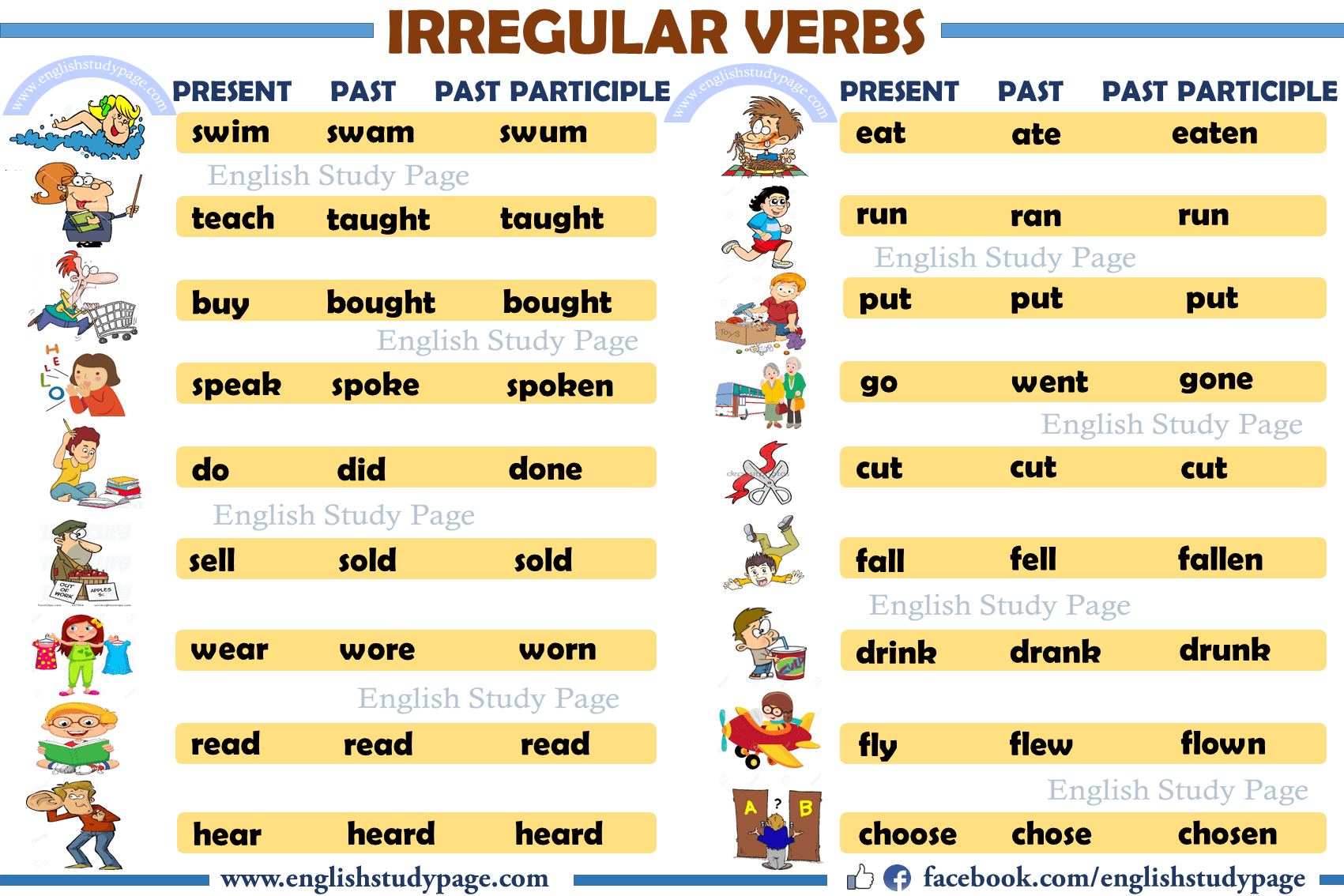
| They speak English. | They English. |
| They take lessons. | They lessons. |
| I tell her everything. | I her everything. |
| Fire burns. | Fire . |
| Cats catch mice. | Catch mice |
| He drives a fast car. | He a fast car. |
| The plane flies high. | The plane high. |
| Squirrels hide nuts. | Squirrels nuts |
| He hits me. | He me. |
| He holds his hands together. | He his hands together. |
PAST PROGRESSIVE
The past progressive puts emphasis on the course of an action in the past.
Form
| Positive | Negative | Question | |
|---|---|---|---|
| I / he / she / it | I was talking. | I wasn't talking. | Was I talking? |
| you / we / they | You were talking. | You weren't talking. | Were you talking? |
Exceptions in Spelling
| Exceptions in spelling when adding ing | Example |
|---|---|
| final e is dropped (but: ee is not changed) | come – coming (but: agree – agreeing) |
| after a short, stressed vowel, the final consonant is doubled | sit – sitting |
| l as final consonant after a vowel is doubled (in British English) | travel – travelling |
| final ie becomes y | lie – lying |
Use of Past Progressive
- puts emphasis on the course of an action in the pastExample: He was playing football.
- two actions happening at the same time (in the past)Example: While she was preparing dinner, he was washing the dishes.
- action going on at a certain time in the pastExample: When I was having breakfast, the phone suddenly rang.
Exercises
NOW HERE YOU HAVE A VIDEO ABOUT PAST SIMPLE AND PAST PROGRESSIVE: | ||||||||||||||||||||||||||
| GOOD LUCK!♥ |


Comentarios
Publicar un comentario